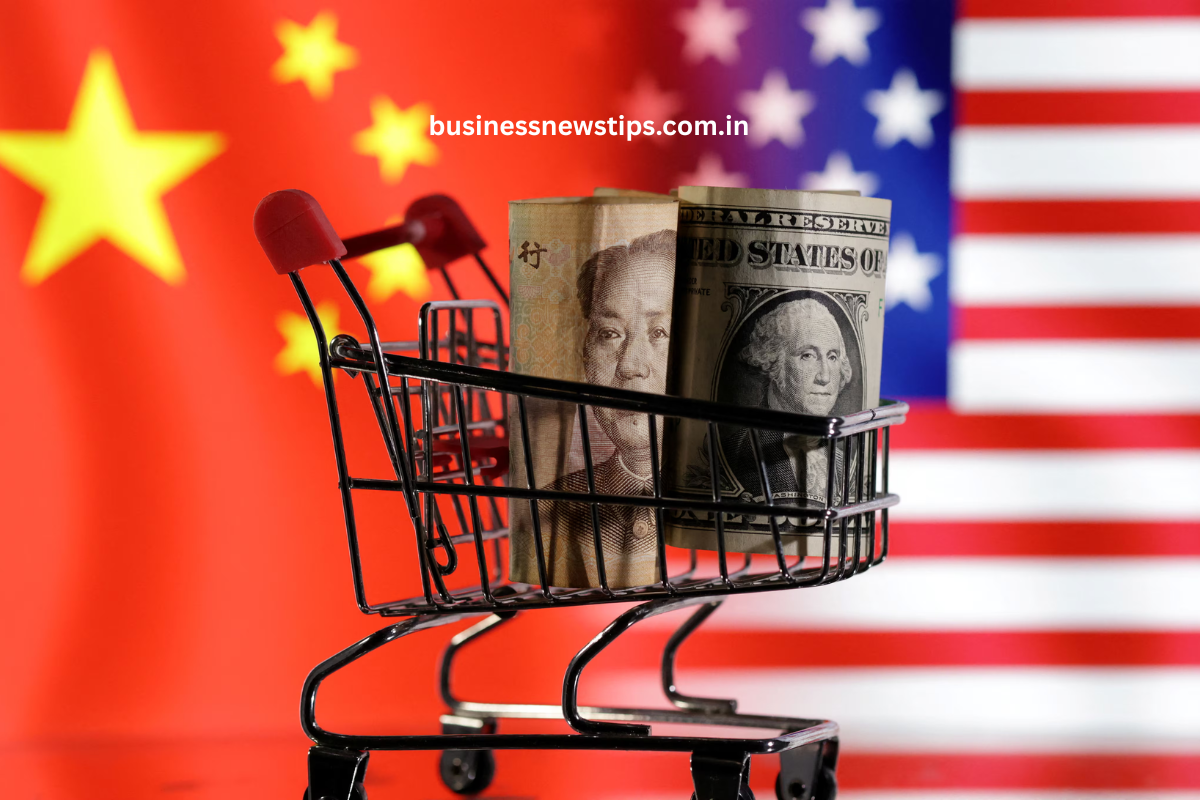
In the midst of the escalating U.S.-China trade war, a topic of growing interest among investors and analysts is the use of China’s vast holdings of U.S. Treasuries. Some see them as a potential weapon that Beijing could leverage to exert financial pressure on Washington. However, while there is a significant public debate around whether these bond holdings offer any true leverage, the situation is much more complex. In reality, both the U.S. and China are trapped in a delicate equilibrium, where the financial advantages of each side are interdependent. This equilibrium is not just a political stance but a financial one as well, and any drastic move in either direction could destabilize both economies.
Understanding the Stakes: China’s Bond Holdings
As of early 2025, China’s holdings of U.S. government debt are vast, estimated at around $1.1 trillion. These holdings place China as the second-largest holder of U.S. Treasuries, after Japan. This immense financial stake makes China’s ability to influence U.S. financial markets appear formidable. In theory, if China were to sell off a significant portion of its Treasury holdings, it could flood the market with bonds, leading to higher U.S. interest rates and perhaps even a destabilization of the dollar.
Yet, such a move could have disastrous consequences for China as well. The question then arises: Why hasn’t China weaponized its Treasury holdings if they hold such potential leverage? The answer lies in the intricate financial and economic interconnections that bind China and the U.S.
The Complex Interdependence
The financial relationship between China and the U.S. is not one-sided. For all of China’s accumulated holdings in U.S. government debt, the U.S. remains one of China’s largest export markets, and China itself has a large pool of dollar-denominated debt, which provides its economy with crucial liquidity and stability. The Chinese central bank, the People’s Bank of China (PBOC), holds vast reserves of foreign exchange that are primarily invested in U.S. Treasuries. These reserves are not just a store of value; they are a vital tool for maintaining the stability of the yuan against the dollar.
A sudden or large-scale divestment of Treasuries would likely lead to an increase in U.S. interest rates, which could send shockwaves through the global economy. The resulting spike in U.S. borrowing costs would put pressure on both American consumers and corporations, but more importantly, it would trigger a chain reaction that could hurt China in several ways. First, any attempt to sell U.S. Treasuries would weaken the value of China’s remaining Treasury holdings. The fire sale of bonds could erode the value of the assets China still holds, effectively defeating the purpose of trying to gain financial leverage.
The Case Against Using Treasuries as Leverage
Despite the theoretical advantage that China’s holdings might seem to provide, U.S. Treasury Secretary Scott Bessent recently dismissed the idea that China could use its bond holdings as leverage in trade negotiations. According to Bessent, the mere size of China’s holdings does not translate into real leverage. Even if China wanted to exert pressure by unloading Treasuries, the consequences would likely be too dire for its own economy.
For one, selling large amounts of U.S. debt would damage the very financial foundation that the Chinese economy depends upon. Given that China’s economic health is partially tied to maintaining a stable yuan, the sale of Treasuries would create a significant risk of pushing the yuan higher, thus hurting Chinese exporters. With the value of the yuan rising, Chinese goods would become more expensive on the global market, undermining the very economy that relies heavily on exports.
Furthermore, the PBOC could not simply ignore the consequences of such a sell-off. If it were to sell U.S. bonds, it would accumulate large amounts of dollars, which would either need to be held in cash or converted into other assets. Both options would present significant risks. Converting the proceeds into foreign assets could destabilize other markets and invite political resistance from countries such as Japan and European nations, which might be uncomfortable with the influx of Chinese capital.
Alternatives to Weaponizing Treasuries
While the direct use of Treasuries as a weapon remains a highly unlikely strategy for China, it is important to examine the alternative measures that China might adopt to protect itself in the face of a trade war with the U.S. One such strategy is the diversification of China’s foreign exchange reserves. In recent years, China has been working to reduce its dependence on U.S. Treasuries, increasing its holdings of other assets, such as gold and non-dollar-denominated bonds.
This diversification serves two purposes. First, it reduces China’s exposure to the U.S. financial system. Second, it positions China to weather potential shocks in the global economy. However, these efforts do not change the fact that the U.S. dollar remains the world’s primary reserve currency, and many global transactions are still conducted in dollars.
A more practical strategy for China may involve focusing on the internal economy, including boosting domestic consumption and reducing reliance on external trade. These efforts could make China less vulnerable to external financial pressures, even in the context of a prolonged trade war.
The Stability of U.S.-China Financial Relations
In spite of the heated rhetoric surrounding the trade war, both China and the U.S. have an undeniable interest in maintaining a stable financial relationship. China needs U.S. Treasuries to maintain its foreign exchange reserves, and the U.S. relies on Chinese capital to finance its own government’s spending. The U.S. needs China to continue buying Treasuries to keep borrowing costs low and avoid a fiscal crisis. On the other hand, China relies on the dollar-denominated debt to facilitate its own foreign exchange operations.
While tensions between the two countries continue to rise, financial interdependence provides a strong counterweight to the idea of complete financial decoupling. As much as the U.S. and China may want to reduce their reliance on each other, the reality is that these two economies are too deeply intertwined. The mutual benefits of stability in this relationship ensure that neither side is likely to make any drastic moves that could disrupt the global economy.
China’s Long-Term Strategy: Managing Financial Stability
China’s long-term strategy may involve managing the stability of its financial system rather than engaging in disruptive actions that could harm both its own economy and the global markets. President Xi Jinping has expressed a preference for maintaining a stable yuan, which suggests that China’s approach to its foreign reserves and U.S. Treasury holdings will be guided by a desire for economic stability.
In the years ahead, China’s financial policies will likely focus on finding ways to diversify its reserves and reduce its exposure to U.S. debt without destabilizing its own currency or trade relationships. At the same time, China will continue to develop its domestic financial markets, which will give it more control over its economic destiny.
Frequently Asked Questions
What are U.S. Treasuries?
U.S. Treasuries are government bonds issued by the United States Department of the Treasury. These bonds allow the U.S. government to borrow money from investors. They come in different forms, such as short-term Treasury bills (T-bills), medium-term Treasury notes (T-notes), and long-term Treasury bonds (T-bonds).
How much U.S. debt does China hold?
China holds a significant amount of U.S. Treasury securities, making it one of the largest foreign holders of U.S. debt, second only to Japan.
Can China use its U.S. Treasury holdings as leverage in trade negotiations?
While some have suggested that China could use its Treasury holdings as leverage, experts argue that it would be a risky strategy. A large-scale sell-off of U.S. Treasuries could lead to higher U.S. interest rates, destabilize global markets, and hurt China’s economy by increasing the value of the yuan, which would make Chinese exports more expensive.
What would happen if China sold its U.S. Treasury holdings?
If China were to sell a large portion of its U.S. Treasury holdings, it could trigger a rise in U.S. interest rates, increasing borrowing costs for the U.S. government, businesses, and consumers. However, this could also weaken the value of China’s remaining Treasury holdings, which would negatively affect China’s financial assets.
Why does China hold U.S. Treasuries in the first place?
China holds U.S. Treasuries mainly as a reserve asset. They provide stability to China’s foreign exchange reserves and help manage the exchange rate of the yuan. Holding U.S. debt is also a way for China to ensure liquidity and have access to a reliable investment that is easy to trade globally.
Conclusion
The idea that China could weaponize its U.S. Treasury holdings remains largely theoretical. While China’s massive bond holdings give it a certain amount of financial influence, the risks associated with any attempt to use these holdings for political leverage outweigh the potential rewards. Both China and the U.S. have an interest in maintaining a stable financial relationship, even as their political and trade relations remain tense.
Rather than acting as a financial weapon, China’s Treasury holdings are better seen as a tool of economic stability, one that is deeply integrated into the country’s broader financial strategy. In the face of a rapidly evolving global economy, the real challenge for China will be to continue managing its reserves in a way that ensures long-term economic security, while navigating the complexities of the U.S.-China trade war.
