On April 19, 2025, in a late-night decision with potentially far-reaching consequences, the U.S. Supreme Court temporarily blocked the Trump administration from deporting a group of Venezuelan migrants accused of being affiliated with criminal organizations. The administration sought to use a seldom-invoked wartime statute — the Alien Enemies Act of 1798 — to facilitate swift deportations without the due process protections typically afforded under immigration law.
The high court’s intervention followed urgent legal filings from the American Civil Liberties Union (ACLU), which said the government had begun deporting individuals without giving them the opportunity to challenge their removal — a move the Supreme Court had explicitly ruled against just weeks earlier.
This case now stands as a flashpoint in the broader debate over executive authority, immigration enforcement, due process, and the balance of power between branches of government in the United States.
Background: A 226-Year-Old Law Resurfaces
The law at the center of this case, the Alien Enemies Act, dates back to 1798 and was originally intended to authorize the removal of nationals from enemy nations during times of declared war. Its revival by the Trump administration marks one of the few times in American history it has been invoked outside of conventional wartime contexts.
President Donald Trump, who returned to office in January 2025, has leaned heavily into immigration enforcement as a cornerstone of his second-term agenda. His administration has labeled the Venezuelan gang Tren de Aragua a terrorist organization and has claimed it has infiltrated migrant groups arriving at the U.S. border.
“The safety of American citizens comes first,” Trump has said on multiple occasions, including during press briefings where he linked immigration to public safety and national security.
According to the administration, many of those being deported have ties to criminal organizations, though immigrant advocates and legal teams argue that many of the migrants, including those already detained or removed, had no criminal records and no realistic opportunity to defend themselves in court.
ACLU’s Emergency Appeal and Supreme Court’s Response
With mounting concern that dozens of detainees were being removed without judicial review, the ACLU filed an emergency request asking the Supreme Court to intervene. They pointed to reports that detainees were already being loaded onto buses and transported to airfields, presumably for deportation to El Salvador, where the U.S. has coordinated with local officials to house deportees.
In response, the Supreme Court issued a brief, unsigned order at around 12:55 a.m., instructing the government to pause all removals of individuals named in the legal filings. “The Government is directed not to remove any member of the putative class of detainees from the United States until further order of this Court,” the decision read.
Two conservative justices — Clarence Thomas and Samuel Alito — publicly dissented from the order.
The administration responded later that afternoon with a request for the court to lift the temporary stay, arguing that the Alien Enemies Act provided sufficient authority and that detainees had been given “adequate notice” before removal. However, they did not specify the length or nature of this notice.
Deportations Already Underway
Despite the stay, multiple reports indicated that the administration had already begun transporting detainees, some of whom were placed aboard buses and driven to regional airports.
Among them was Diover Millan, a 24-year-old Venezuelan who had reportedly been granted Temporary Protected Status (TPS) after arriving in the U.S. in 2023. His wife, who asked to remain anonymous for fear of retaliation, told reporters that Millan was taken from an immigration detention facility in Atlanta and told he would be sent to a prison in El Salvador.
The prison in question, known as CECOT — a maximum-security facility — was designed to house violent gang members. However, rights advocates have criticized the use of such prisons to house migrants not convicted of crimes.
“We’re scared,” Millan’s wife said. “He doesn’t belong in a place like that.”
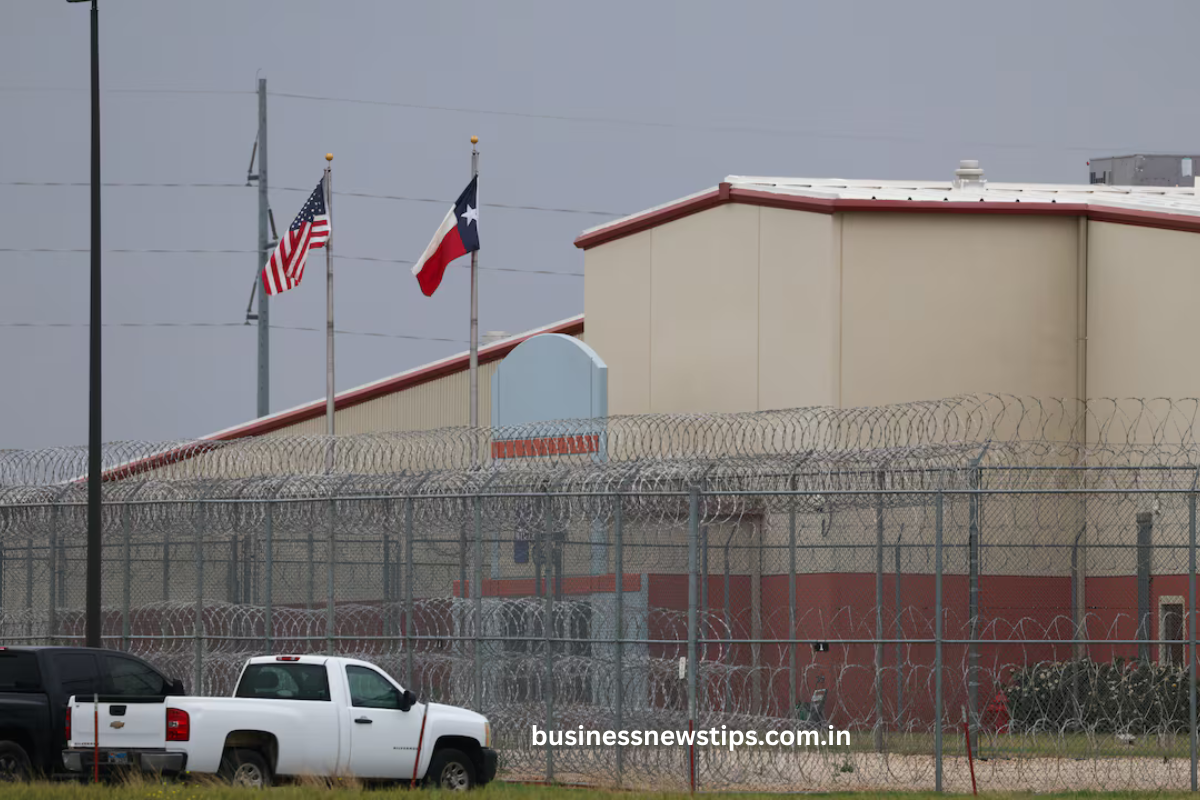
Reports from TikTok and other social media platforms included audio recordings in which detainees claimed to be falsely accused. “We’re not gang members,” one man reportedly said in an unverified recording, adding that they were detained at the Bluebonnet Detention Center in Texas.
Legal Confusion and Constitutional Tensions
At the heart of this issue lies the question of due process — particularly the right to habeas corpus, which allows detainees to challenge the legality of their detention. In a 5-4 ruling earlier this year, the Supreme Court ruled that removals under the 1798 law could proceed only if detainees were given “reasonable notice” and allowed to seek habeas relief before deportation.
What the ruling did not do, however, is define what “reasonable notice” means in practice. The ACLU and other legal organizations argue that at least 30 days’ notice is necessary to prepare legal filings and challenge deportations in federal court.
But the Trump administration has adopted a much narrower interpretation, insisting that mere hours or days is sufficient — and often without direct legal counsel or contact with family members.
Solicitor General D. John Sauer submitted a filing asking the Court to clarify that its stay does not apply to deportations conducted under other authorities. This adds another layer of complexity to the situation, as it raises questions about whether detainees could be removed under separate immigration laws.
A Broader Immigration Crackdown
Since his return to office, Trump has ramped up immigration enforcement across the country. His administration has expanded detention capacity, issued executive orders curtailing asylum eligibility, and increased removals of undocumented individuals.
The administration’s invocation of the Alien Enemies Act has raised concerns among legal scholars who say it sets a dangerous precedent for executive overreach. Critics argue that using wartime powers to remove individuals from countries the U.S. is not at war with — and based on alleged gang affiliations without trial — represents a profound departure from established constitutional norms.
Immigration attorney Lee Gelernt of the ACLU has been one of the most prominent voices in opposition. “These men were in imminent danger of spending their lives in a horrific foreign prison without ever having had a chance to go to court,” he said. “We are relieved that the Supreme Court has not permitted the administration to whisk them away the way others were just last month.”
The administration’s legal position hinges on the belief that the president’s authority in immigration matters is broad — particularly when framed as a national security issue. However, several district court rulings have pushed back on this assertion, and at least one judge — James Boasberg — threatened the administration with contempt for moving forward with deportations despite ongoing litigation.
Political and Legal Fallout
The Trump administration’s actions have not gone unnoticed by the broader legal community. Chief Justice John Roberts issued a rare public rebuke earlier this year after Trump called for the impeachment of Judge Boasberg following a ruling against the administration.
That moment marked an inflection point in what many see as an ongoing battle between the judiciary and the executive.
Though Trump has not publicly defied the Court’s latest order, observers remain watchful. “This situation could quickly escalate into a constitutional crisis if the administration disregards the Court’s instructions,” said one legal analyst.
So far, the White House has signaled it will respect the court’s decision — for now. Press Secretary Karoline Leavitt issued a statement saying, “We are confident in the lawfulness of the Administration’s actions and in ultimately prevailing against an onslaught of meritless litigation brought by radical activists who care more about the rights of terrorist aliens than those of the American people.”
The Human Toll
At the center of this legal storm are real people — many of whom say they fled violence and economic collapse in Venezuela, seeking safety and opportunity in the United States. Some arrived with children. Others traveled alone, only to find themselves detained and accused of gang ties without any chance to respond.
Immigrant rights advocates say many were detained on flimsy evidence — often just social media profiles, tattoos, or anonymous tips — and that few had access to attorneys.
“We’re not just fighting legal battles,” said one ACLU attorney. “We’re fighting for families, for fairness, and for the basic idea that everyone deserves a chance to defend themselves.”
Many detainees, according to affidavits and interviews with family members, had no criminal history and were working or seeking asylum at the time of their arrests. Some had pending asylum claims, work permits, or TPS status — all of which were seemingly ignored in the administration’s rush to deport.
What Comes Next
The case now awaits further deliberation by the Supreme Court. Depending on how the justices rule, the administration could be cleared to resume deportations — or be forced to significantly adjust its approach.
Lower courts are also set to examine whether the government’s notice was adequate and whether detainees were afforded the rights laid out in previous rulings.
Meanwhile, legal teams continue to push for clarity and for stronger protections for migrants caught in the dragnet. Advocacy groups have organized nationwide campaigns calling for the end of deportations under the Alien Enemies Act and for the restoration of full due process rights in immigration proceedings.
The Department of Justice, for its part, maintains that it is acting within legal bounds and that national security justifies swift and decisive action.
But to many watching — both in the legal community and in immigrant households across the country — the case represents more than just a technical legal battle. It’s about the soul of American justice.
Frequently Asked Questions
What is the Alien Enemies Act, and why is it controversial?
The Alien Enemies Act of 1798 is a rarely used law that allows the U.S. government to detain or deport individuals from countries the U.S. is at war with. While historically used during declared wars, the Trump administration invoked it to deport Venezuelan migrants without trial, arguing they posed national security threats. Critics argue the law is outdated and is being misapplied in ways that violate constitutional rights.
Why did the Supreme Court block the deportations?
The Court issued a temporary order halting the deportations after the ACLU filed an emergency request. The justices were concerned that the migrants were not given adequate notice or the opportunity to challenge their removal in court, which goes against previous Supreme Court rulings emphasizing the right to habeas corpus and due process.
Who are the affected migrants?
Most of the affected individuals are Venezuelan men who entered the U.S. in recent years, many of whom are claiming asylum or have Temporary Protected Status. While the government asserts they are affiliated with criminal gangs like Tren de Aragua, family members and legal advocates say many have no criminal history and are being wrongfully targeted.
What is the government’s argument for using this law?
The Trump administration claims that national security concerns justify the use of the Alien Enemies Act. Officials argue that gang members embedded in migrant groups pose threats to public safety and that the law provides the necessary authority to act swiftly.
Could the deportations still proceed?
Yes, depending on how the Supreme Court rules in the coming weeks. The stay is temporary and intended to give lower courts time to decide whether the government’s actions comply with constitutional protections. The administration is pushing for the order to be lifted so deportations can resume under various legal authorities.
What are advocates calling for?
Immigration and civil rights groups are urging the courts to require the government to give detained migrants fair notice and access to legal representation before deportation. Many are calling for the repeal or reevaluation of the Alien Enemies Act altogether, arguing it is incompatible with modern democratic values.
Conclusion
The Supreme Court’s temporary block on the deportation of Venezuelan migrants has highlighted deep divisions over immigration policy, executive authority, and constitutional protections. At the heart of the debate is a centuries-old wartime law being used in a context the original authors could never have imagined — and with real human lives on the line.
As the case continues to unfold, it may set lasting precedents on how far a president can go in using national security as justification for removing migrants without trial. For the individuals at the center of this legal battle, the stakes couldn’t be higher: the chance to remain in the U.S. and assert their rights — or deportation to countries and prisons where their futures remain dangerously uncertain.
