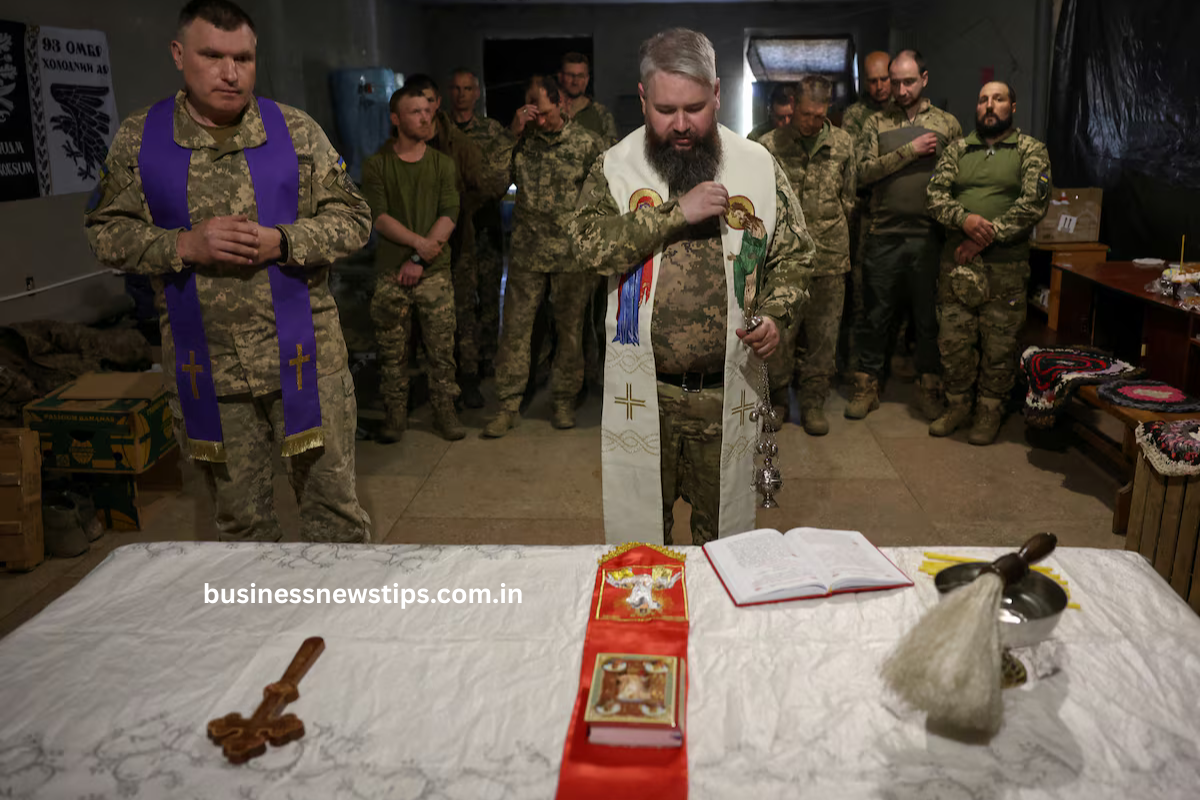
As the world celebrated the Easter holiday, the ongoing conflict between Ukraine and Russia took a dramatic turn when both Kyiv and Moscow accused each other of violating a temporary ceasefire that was supposed to hold during this sacred period. The ceasefire was intended to offer respite to civilians caught in the conflict, allowing humanitarian aid to reach those in need and providing a brief moment of peace amidst the violence.
Background of the Ceasefire
The ceasefire, which was declared ahead of the Orthodox Easter celebrations, was part of a broader effort to facilitate peace during a significant religious period. Both Russia and Ukraine had agreed, at least in principle, to suspend major military operations for a limited period, allowing for the safe passage of humanitarian supplies and a reduction in hostilities. However, given the fragile nature of the truce, many feared that it would be short-lived.
Accusations Fly
On the second day of the ceasefire, both sides began accusing one another of violating the terms. Ukraine’s military reported multiple Russian artillery strikes along the frontlines, particularly in eastern Ukraine, claiming that Russia had used the holiday as a cover to intensify its assault. Kyiv also accused Russian forces of targeting civilian areas, an allegation that has been a recurring theme throughout the conflict.
On the other hand, Moscow also accused Ukrainian forces of breaching the ceasefire. Russian officials pointed to what they described as Ukrainian provocations in the Donbas region, claiming that Ukrainian troops had launched attacks on Russian positions. Russian-backed separatists in the region further alleged that Ukraine was responsible for escalating tensions during the brief period of supposed peace.
The Humanitarian Crisis
The lack of a genuine ceasefire has continued to exacerbate the humanitarian crisis in Ukraine. Despite the brief pause in hostilities, the constant accusations of violations have further complicated efforts to deliver aid to affected regions. International organizations, including the United Nations, had expressed hope that the ceasefire would create a window for essential supplies to reach people in war-torn areas, but the ongoing military actions have made this nearly impossible.
Witnesses from the frontlines described how the war’s toll on civilians remains severe. Shelters, hospitals, and homes continue to be hit by artillery shells, leaving families displaced and vulnerable.
No Extension of the Ceasefire
Despite the ongoing tensions and accusations, there appears to be little hope for extending the ceasefire. Both sides have shown little interest in prolonging the truce, citing the violations and a lack of trust between the warring factions. Kyiv insists that the only way to achieve lasting peace is for Russia to withdraw its forces, while Moscow demands that Ukraine fully adhere to its claims of autonomy for the separatist regions.
The Easter ceasefire was seen as a brief opportunity to ease the devastating impacts of the conflict, but it quickly became apparent that the underlying hostilities remain unyielding.
The Road Ahead
As the ceasefire comes to an end, the conflict between Ukraine and Russia shows no signs of abating. The accusations exchanged by both Kyiv and Moscow serve as a reminder of the deep-seated distrust between the two nations, making a lasting resolution to the war appear more distant than ever.
With no clear path to peace on the horizon, civilians continue to bear the brunt of the violence. For now, the hope of a genuine ceasefire or an extension of the Easter truce remains elusive, and the situation in Ukraine continues to deteriorate.
Escalating Tensions and Stalemate
The accusations exchanged by Kyiv and Moscow over the alleged ceasefire violations are more than just a temporary setback in the peace process; they highlight the ongoing and seemingly intractable nature of the conflict. Despite numerous attempts at negotiations, both sides remain entrenched in their positions, with little room for compromise.
Russia has repeatedly stated that its objectives in Ukraine are to protect ethnic Russians in the Donbas region and to prevent NATO’s expansion closer to its borders. The Russian leadership claims that Ukrainian actions, particularly those of Ukrainian nationalists, have escalated the conflict, leading to Russia’s intervention.
On the other hand, Ukraine insists that its sovereignty and territorial integrity are non-negotiable. Kyiv views the Russian invasion as an act of aggression that must be repelled for the survival of the nation. Ukrainian officials have consistently rejected any form of territorial compromise and have called for the international community to hold Russia accountable for its actions.
This ideological divide has made any form of lasting ceasefire, let alone peace, nearly impossible to achieve. The war, which began with Russia’s annexation of Crimea in 2014 and escalated into full-scale invasion in 2022, has resulted in thousands of deaths, widespread displacement, and a decimated economy.
The Role of International Mediators
International efforts to mediate peace between Kyiv and Moscow have thus far proven ineffective, and the accusations surrounding the Easter ceasefire suggest that trust in these mediation processes is dwindling. The United Nations and the European Union have repeatedly called for a return to negotiations, but both sides have been hesitant to engage in meaningful talks.
The international community has been divided in its approach to the war. While Western powers, particularly the United States and the European Union, have provided military aid and sanctions against Russia, they have also pushed for diplomatic solutions. However, many within the international community are beginning to question whether diplomacy can succeed when both sides are so firmly rooted in their positions.
Russia’s reliance on China as a diplomatic partner has also created complications. While China has called for peace and dialogue, its stance on the issue remains ambiguous, and its alignment with Russia has raised concerns among Western nations. China’s involvement, or lack thereof, in pressuring Russia for a ceasefire or peace agreement has made mediation even more difficult.
Humanitarian Efforts Continue Amid Conflict
While the political and military landscape remains grim, humanitarian organizations are tirelessly working to provide assistance to those most affected by the conflict. Agencies such as the Red Cross and Doctors Without Borders have increased their presence in Ukraine, attempting to deliver medical aid, food, and shelter to civilians caught in the crossfire.
However, delivering aid has been an uphill battle. The conflict zones in eastern Ukraine and along the frontlines are difficult to access, and aid convoys are often targeted or delayed due to ongoing hostilities. The lack of a stable ceasefire has made these efforts particularly hazardous, and many workers have found themselves in dangerous situations as they try to assist those in need.
The scale of the humanitarian crisis is staggering. According to estimates, over 8 million Ukrainians have been displaced within the country, with millions more seeking refuge in neighboring countries. The destruction of infrastructure, including hospitals, schools, and homes, has left the population vulnerable, and the psychological toll on civilians is profound. The Easter ceasefire, which was supposed to bring a temporary halt to the violence, only briefly alleviated these dire conditions.
Military Dynamics on the Ground
The military situation on the ground remains fluid, with both Ukrainian and Russian forces engaged in intense fighting. The Ukrainian army, bolstered by Western military aid, has managed to hold off many Russian offensives, especially in major cities like Kyiv and Kharkiv. However, Russian forces have continued to make incremental gains in eastern Ukraine, particularly in the Donetsk and Luhansk regions, where heavy battles have raged for years.
The Ukrainian military has employed a combination of defensive strategies, including artillery and drone warfare, to counter the Russian advance. While Ukrainian forces have successfully regained some territories, the situation remains a stalemate, with neither side willing to concede significant territory.
Russian forces, for their part, have heavily relied on artillery bombardments, airstrikes, and missile attacks to weaken Ukrainian defenses. These tactics, while effective in terms of territory gained, have come at a high cost, particularly in civilian lives. The use of heavy artillery and missiles has raised concerns about violations of international law, with both sides accusing each other of targeting civilian areas.
The Prospects of Peace
As both Kyiv and Moscow continue to accuse each other of violating the Easter ceasefire, the prospects of a lasting peace agreement seem increasingly remote. The mutual distrust and the lack of genuine willingness to compromise make it difficult to envision a breakthrough in the negotiations.
The international community, including major powers like the United States, France, and Germany, continue to call for a return to dialogue, but these calls have so far been ignored by both sides. The Ukrainian government has made it clear that it will not negotiate with Russia unless it withdraws from all occupied territories, including Crimea, while Russia has stated that it will not leave the regions it controls.
For now, the ceasefire has collapsed, and the conflict continues to rage on. The people of Ukraine remain in desperate need of a solution, but the path to peace seems increasingly uncertain. With both sides accusing each other of bad faith and violations, it seems that the war will continue to claim lives and devastate the region, with little hope for a quick resolution.
Frequently Asked Questions
What was the purpose of the Easter ceasefire between Kyiv and Moscow?
The Easter ceasefire was intended to provide a temporary pause in military operations during the Orthodox Easter holiday. The goal was to allow humanitarian aid to reach civilians, offer respite from violence, and create a brief period of peace amid the ongoing conflict.
Why did both sides accuse each other of violating the ceasefire?
Both Ukraine and Russia have accused each other of breaching the terms of the ceasefire. Ukraine claims Russia used the ceasefire as a cover to intensify its attacks, particularly in the eastern regions of Ukraine, while Russia accuses Ukraine of violating the truce by launching attacks on Russian-backed separatists and Russian positions.
Was the Easter ceasefire intended to be permanent?
No, the ceasefire was always intended to be temporary, just for the duration of the Easter holiday. However, both sides’ accusations of violations have made it clear that a lasting peace is still far from being achieved.
Why does the ceasefire matter if it was only temporary?
While temporary, ceasefires during conflicts can provide crucial humanitarian windows for aid distribution and allow civilians to find safety from ongoing violence. Additionally, ceasefires can serve as moments to de-escalate hostilities and open the door for diplomatic negotiations, though that is often difficult to achieve.
What is the current status of the conflict after the Easter ceasefire ended?
After the ceasefire ended, hostilities between Ukraine and Russia resumed, with both sides accusing each other of continuing violations. The conflict remains intense, and there is no immediate indication that further ceasefire agreements will be reached or that a lasting peace solution is near.
Conclusion
The brief Easter ceasefire between Kyiv and Moscow was an opportunity for peace, but the mutual accusations of violations highlight the deep mistrust and entrenched positions of both sides. The failure of the ceasefire underscores the challenges of negotiating peace in a conflict marked by territorial disputes, national sovereignty concerns, and geopolitical tensions. As the fighting resumes, civilians continue to suffer, and the humanitarian crisis deepens. With little hope for an extension of the truce or meaningful dialogue, the road to peace remains uncertain. Without substantial compromises or shifts in strategy, both sides may find themselves caught in a prolonged and devastating conflict with no clear end in sight.
