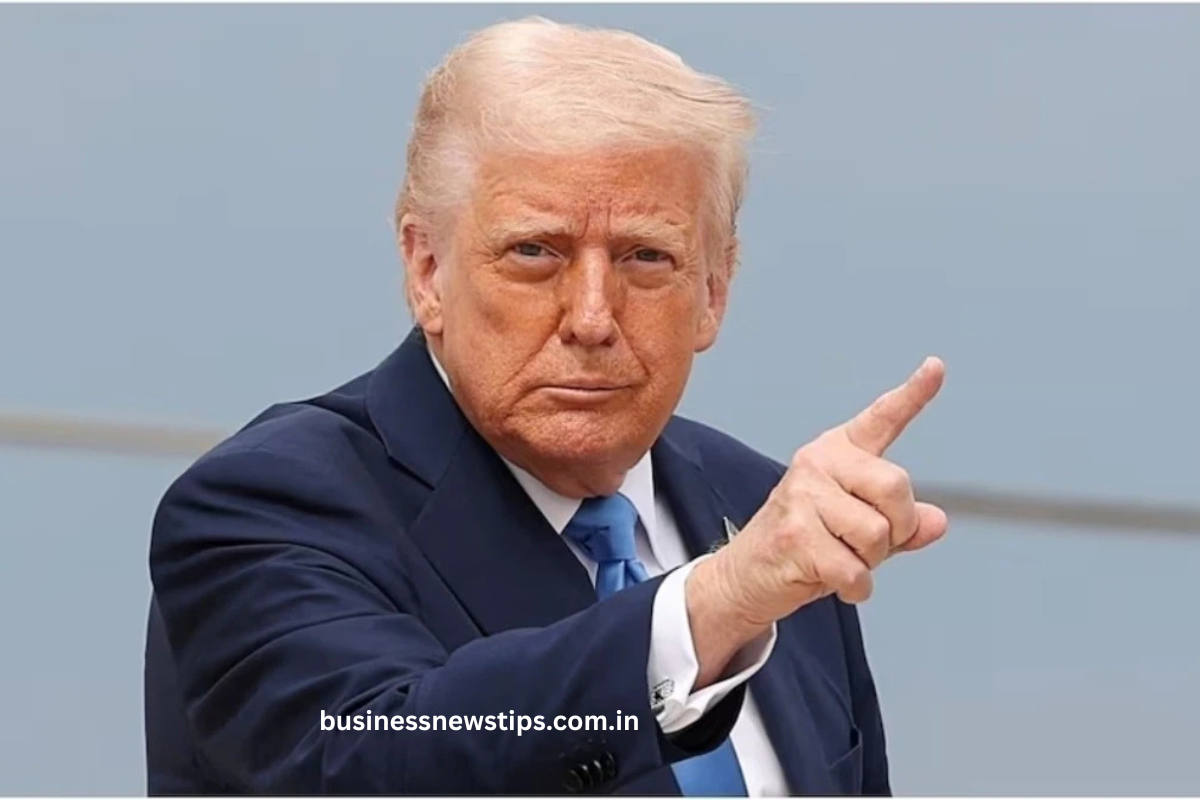
In a business landscape already grappling with fluctuating consumer demand and global instability, the reimposition of steep tariffs under President Donald Trump’s administration has become the defining topic in boardrooms across America and beyond. As first-quarter earnings season unfolds, executives are detailing — sometimes reluctantly — how their companies plan to navigate the fresh wave of import taxes.
For many, price increases seem inevitable. Others are exploring the arduous and costly process of reshuffling supply chains and relocating manufacturing plants. Still more are taking a cautious “wait-and-see” approach, mindful that political winds can shift suddenly. As companies weigh their options, they must also consider the delicate balance between preserving profitability and maintaining customer loyalty — a tightrope made even more precarious by memories of recent inflation surges.
“We have factories basically in every region of the world. But we don’t want to take any measures based on something that might be temporary,” Nicolas Hieronimus, CEO of L’Oréal, said last week, according to a transcript from AlphaSense. “We are watching carefully what’s happening and trying to figure out what will be the end game.”
This sentiment captures the uncertainty many global firms feel. Strategic patience, coupled with contingency planning, is fast becoming the corporate playbook.
Companies Prepare to Raise Prices
From everyday essentials to luxury goods, companies across sectors are poised to pass the burden of tariffs onto consumers — albeit carefully.
Procter & Gamble (PG), the household goods titan behind brands like Tide, Charmin, and Dawn, has indicated that selective price increases are on the table. Although executives are wary of alienating customers in a sensitive economic environment, absorbing the tariffs entirely could severely erode margins.
Similarly, Hermès, the French luxury house known for its coveted Birkin bags and silk scarves, will raise prices in the United States starting next month, CNBC reported. Notably, these hikes are being limited to the American market — a clear indication that tariffs, not general inflation, are the driving force behind the adjustments.
Toymaker Hasbro (HAS) finds itself in a particularly challenging position. About half of its products are manufactured in China, making it highly exposed to new tariffs. Hasbro CEO Chris Cocks told investors that while price increases are “unavoidable,” they must be implemented with precision to avoid consumer pushback.
“We definitely think $9.99 and $19.99 price points are important,” Cocks said, underscoring the psychological significance of keeping prices under key thresholds.
Price increases, however, carry risks. Kimberly-Clark (KMB), the parent company of brands like Huggies and Kleenex, is approaching the problem cautiously. CEO Michael Hsu noted that while competitors sourcing locally may have a price advantage, Kimberly-Clark aims to mitigate its $300 million annual tariff hit primarily through supply chain adjustments rather than widespread price hikes.
“We’re trying to be disciplined on price,” Hsu said. He emphasized that consumers remain highly price-sensitive, particularly as they emerge from what he termed an “inflation super cycle” that has already strained household budgets.
Shifting Supply Chains: A Complex Dance
While pricing strategies offer a partial remedy, some companies are contemplating deeper operational changes.
Automaker Hyundai plans to shift production of its Tucson model, a compact SUV, from Mexico to Alabama for vehicles bound for the U.S. market. Meanwhile, its Mexican facilities will pivot to serve Canadian consumers. This geographic realignment is emblematic of a broader trend: reducing reliance on manufacturing hubs vulnerable to trade penalties.
Protective apparel manufacturer Lakeland Industries (LAKE) outlined a similar tactic earlier this month. Facing increased tariffs, the company plans to relocate the production of turnout gear — essential for firefighters — to minimize cost impacts and ensure uninterrupted supply to U.S. customers.
However, shifting manufacturing is no simple feat. Supply chains are intricate networks built over years — sometimes decades. Moving operations entails significant expenses, regulatory hurdles, and operational risks. Companies must weigh these factors carefully against the uncertain duration of tariffs.
Flexsteel Industries (FLXS), an Iowa-based furniture maker, is currently evaluating its options. CEO Derek Schmidt said that while the company has imposed a modest surcharge on Vietnam-sourced goods — which account for more than half its revenue — it is also modeling various scenarios depending on how trade policy evolves.
Tariffs, Inflation, and the Consumer Mindset
Beyond boardroom strategies, tariffs threaten to ripple through the broader economy by reigniting inflationary pressures.
Consumers, still sensitive after enduring two years of surging prices, are showing signs of fatigue. Household spending, while resilient thus far, could falter if another wave of price hikes takes hold. Economists warn that unlike supply-driven inflation (caused by pandemic-era shortages), tariff-induced inflation acts more like an artificial tax on consumption.
“Tariffs are essentially a tax on imports,” said Dana Peterson, Chief Economist at The Conference Board. “When companies pass those costs onto consumers, you get a hidden inflation effect that’s regressive — it hits lower-income households hardest.”
In turn, slower consumer spending could dampen corporate revenues and weaken economic growth, setting off a feedback loop that would be difficult to reverse.
Political Uncertainty Clouds the Outlook
Compounding the problem is the political uncertainty surrounding tariffs.
President Trump’s administration has delayed implementing some deficit-based tariffs until July, signaling a willingness to negotiate. At the same time, he has made clear that tariffs are a centerpiece of his trade strategy — a message that both excites and alarms different corners of the business community.
Negotiations with China are particularly volatile. Beijing has responded to U.S. tariffs with duties of its own, exceeding 100% on some American goods. An all-out trade war would have profound implications for global supply chains, stock markets, and consumer confidence.
Some companies are hedging their bets. Others are lobbying behind the scenes for more favorable treatment. But most are preparing for a long, bumpy road ahead.
Sector by Sector: A Breakdown
Consumer Staples
Companies like Procter & Gamble and Kimberly-Clark operate in low-margin, high-volume industries where pricing power is limited. Executives in this sector are especially wary of losing market share to lower-cost competitors.
Luxury Goods
Brands like Hermès have more leeway to raise prices without damaging their image. Wealthier consumers tend to be less price-sensitive, allowing luxury firms to absorb tariffs with minimal demand destruction — at least in the short term.
Automotive
Hyundai’s strategic pivot highlights the auto industry’s vulnerability. Tariffs can severely disrupt just-in-time manufacturing models, forcing companies to maintain higher inventories and invest in redundant capacity.
Industrial and Manufacturing
For companies like Flexsteel and Lakeland Industries, tariff risks are leading to fundamental reassessments of where and how they make products. Long-term contracts, specialized labor needs, and regulatory hurdles make shifting production a massive endeavor.
The Road Ahead
Ultimately, the future path of tariffs — and their economic impact — remains uncertain.
Some analysts predict that companies will gradually adapt, smoothing out the bumps through diversified sourcing and selective price adjustments. Others warn that tariffs could trigger a broader slowdown if consumer sentiment sours and business investment contracts.
One thing is clear: companies are being forced to rethink long-standing assumptions about globalization, pricing power, and operational resilience.
Frequently Asked Questions
Why are companies raising prices because of tariffs?
Tariffs increase the cost of imported goods and raw materials. To maintain profit margins, many companies are passing these higher costs on to consumers through price hikes.
Which industries are most affected by the new tariffs?
Industries heavily reliant on global supply chains — such as consumer goods, automotive, manufacturing, and luxury retail — are among the most affected.
Are all companies shifting their manufacturing operations?
No. While some companies like Hyundai and Lakeland Industries are adjusting their production footprints, many firms are taking a “wait-and-see” approach due to the high cost and complexity of moving factories.
Will consumers immediately notice higher prices?
It depends. Some companies are gradually implementing price hikes or adding surcharges to specific products, while others are holding off in hopes the tariffs are temporary.
How could tariffs impact the overall economy?
Tariffs can act as an indirect tax on consumers, potentially slowing consumer spending. Over time, they may contribute to inflation and dampen economic growth if widespread price increases occur.
What role does political uncertainty play in corporate decision-making?
A major one. Companies are cautious about making permanent moves like relocating production because trade policies could change quickly depending on negotiations or election outcomes.
Can companies completely avoid the impact of tariffs?
It’s difficult. While companies can explore alternative sourcing and supply chain shifts, most businesses will feel some financial impact, either directly through costs or indirectly through market instability.
Conclusion
As tariff tensions rise once again, companies across industries face complex decisions that could reshape their operations, pricing strategies, and customer relationships for years to come. While some businesses are proactively raising prices or relocating production, others are cautiously monitoring the evolving trade landscape, wary of making costly moves based on temporary political shifts.
