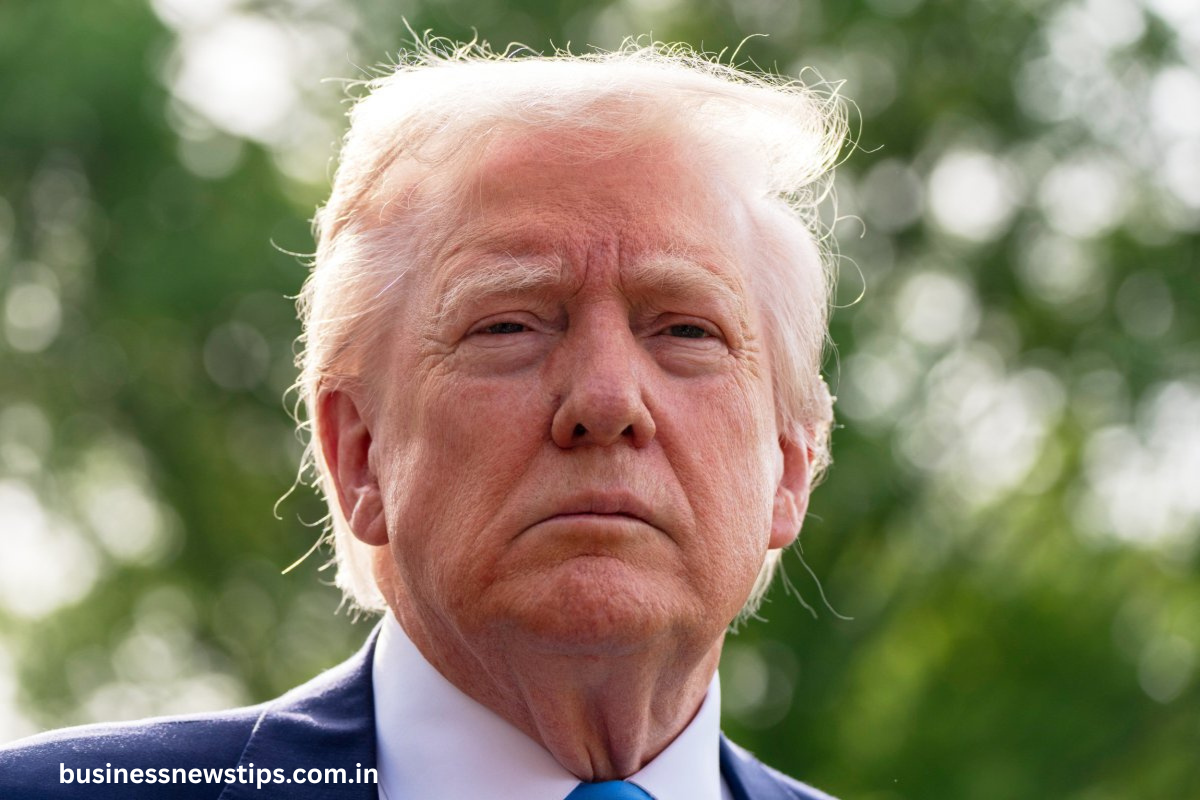
In a bold political maneuver that has stirred national debate, Representative Shri Thanedar, a Democrat from Michigan, has introduced seven articles of impeachment against former President Donald J. Trump. This move, announced on April 28, 2025, has reignited fierce discussions on presidential accountability, the durability of democratic institutions, and the deeply divided state of American politics.
Although the articles are widely considered symbolic, with little expectation of advancing through the Republican-controlled House of Representatives, the introduction underscores a persistent sense of urgency and alarm among segments of the Democratic Party regarding Trump’s ongoing influence in American political life.
This comprehensive article explores the motivations behind Thanedar’s action, the historical and legal context of presidential impeachment, past efforts to remove Trump from office, the implications for future presidencies, and how this moment fits into the broader narrative of American democracy in the 21st century.
Background: Trump’s Return to the Spotlight
Donald Trump’s political career has been one of the most controversial and polarizing in U.S. history. After his defeat in the 2020 presidential election by Joe Biden, Trump maintained a dominant presence in Republican politics, often flirting with another run and continuing to hold mass rallies across the country. By late 2024, he had declared his candidacy for the 2024 election, ultimately securing the Republican nomination and winning the presidency in a contentious election marred by accusations of voter suppression, legal battles, and widespread misinformation.
Since retaking office in January 2025, Trump has pursued an aggressive policy agenda focused on deregulation, increased executive power, and what he terms “America First 2.0.” His critics argue that his administration has taken an increasingly authoritarian turn, curtailing civil liberties and undermining the rule of law. It is against this backdrop that Representative Shri Thanedar introduced seven articles of impeachment in the House of Representatives.
Who is Shri Thanedar?
Shri Thanedar, an Indian-American entrepreneur turned politician, represents Michigan’s 13th congressional district. Known for his outspoken progressive stances, Thanedar has focused on economic justice, civil rights, and preserving democratic norms. He previously served in the Michigan state legislature before being elected to Congress. In announcing the articles of impeachment, Thanedar stated that Trump remains “a clear and present danger to the United States Constitution and to our democracy.”
His resolution has drawn both praise and criticism. Supporters see it as a principled stand against authoritarianism, while critics argue it is a partisan move that will only further inflame political divisions.
The Seven Articles of Impeachment
Although the specific text of each article has not yet been published in full, sources close to Thanedar’s office have outlined the general nature of the accusations. The seven articles reportedly include:
- Incitement of Insurrection – Citing Trump’s role in the January 6, 2021, Capitol riot, and his continued rhetoric promoting political violence.
- Abuse of Power – Accusations of using the presidency to pursue personal and political vendettas.
- Obstruction of Justice – Allegations stemming from previous investigations during his first term, including interference in the Mueller investigation.
- Violation of the Emoluments Clause – Profiting from the office of the presidency through his businesses.
- Undermining the Electoral Process – Attempts to overturn the 2020 and 2024 elections through legal and extralegal means.
- Attacks on the Free Press – Systematic efforts to delegitimize journalists and curtail freedom of the press.
- Violations of Civil Liberties – Use of executive power to target political opponents, activists, and immigrants.
Each article paints a picture of a president who, according to Thanedar and his allies, has repeatedly violated constitutional norms and posed a threat to democratic governance.
Legal and Constitutional Framework
Impeachment is one of the most serious and rarely used tools available to Congress. Under Article II, Section 4 of the United States Constitution, the president, vice president, and all civil officers of the United States can be impeached and removed from office for “Treason, Bribery, or other high Crimes and Misdemeanors.”
Historically, impeachment has been used sparingly. Prior to Trump, only Andrew Johnson, Bill Clinton, and Richard Nixon (who resigned before the House could vote) faced impeachment proceedings. Trump himself became the first president in U.S. history to be impeached twice—first in 2019 for abuse of power and obstruction of Congress, and again in 2021 for incitement of insurrection. He was acquitted by the Senate on both occasions.
Political Reaction: A Divided Congress
Unsurprisingly, the reaction on Capitol Hill to Thanedar’s resolution has been sharply divided along partisan lines. Most Democrats have expressed support or at least sympathy for the move, viewing it as a moral necessity. Progressive members of the party have called for even more aggressive action to rein in Trump’s power and to establish clear limits on presidential conduct.
Republicans, meanwhile, have almost unanimously condemned the impeachment articles. Speaker of the House Mike Johnson called the resolution “a stunt, nothing more,” and accused Democrats of “weaponizing impeachment for political gain.” Other GOP leaders have echoed this sentiment, arguing that the continued focus on Trump distracts from pressing national issues such as inflation, immigration, and foreign policy challenges.
The Role of Public Opinion
Public opinion on impeachment remains polarized. A recent national poll conducted shortly after the announcement of the articles found that 48% of Americans support Thanedar’s move, while 45% oppose it. The divide breaks sharply along party lines: over 85% of Democrats favor impeachment, while over 80% of Republicans oppose it. Independents are more evenly split.
The poll also revealed a growing concern among voters about democratic backsliding and the erosion of checks and balances. However, many Americans remain skeptical about whether impeachment is an effective or constructive response.
Historical Precedents and Political Strategy
Thanedar’s resolution continues a trend that has emerged since Trump first took office: the normalization of impeachment as a political tool. Critics argue that repeated impeachment efforts may dilute its power and reduce it to a symbolic gesture rather than a mechanism of accountability. Others contend that in the face of egregious misconduct, Congress has a duty to act, regardless of political feasibility.
This tension between principle and pragmatism lies at the heart of the impeachment debate. Thanedar has argued that failure to act would be tantamount to complicity, stating, “History will judge us not just by what we tolerate, but by what we refuse to accept.”
Looking Ahead: What Happens Next?
While the impeachment resolution is unlikely to move forward in the current Congress, its introduction sets a precedent and could lay the groundwork for future actions. Should the political balance shift in the 2026 midterms, or should Trump face additional legal jeopardy, the groundwork laid by Thanedar could gain renewed relevance.
Some legal scholars have even speculated that repeated introduction of impeachment articles—even if they do not advance—could serve to document and archive accusations against Trump in the Congressional record, providing a basis for potential future legal or constitutional action.
Broader Implications for American Democracy
The Thanedar resolution also raises deeper questions about the state of American democracy. Are the constitutional mechanisms designed to check executive power still effective? Has political polarization rendered accountability impossible? And what kind of precedent does Trump’s presidency set for future leaders?
Many political analysts argue that the American system is facing a stress test unlike any since the Civil War. The survival of the republic, they contend, depends not just on laws and institutions, but on the willingness of elected officials to uphold democratic norms—even at political cost.
Frequently Asked Questions
Who introduced the impeachment articles against Donald Trump in 2025?
Representative Shri Thanedar, a Democrat from Michigan, introduced seven articles of impeachment against Donald Trump on April 28, 2025.
Conclusion
Representative Shri Thanedar’s introduction of seven articles of impeachment against Donald Trump may ultimately go nowhere in legislative terms. But it represents a profound moment in the ongoing struggle over the future of American democracy. Whether viewed as an act of political courage or partisan overreach, it is a reminder that the battle for the soul of the nation continues—and that the stakes have never been higher.
