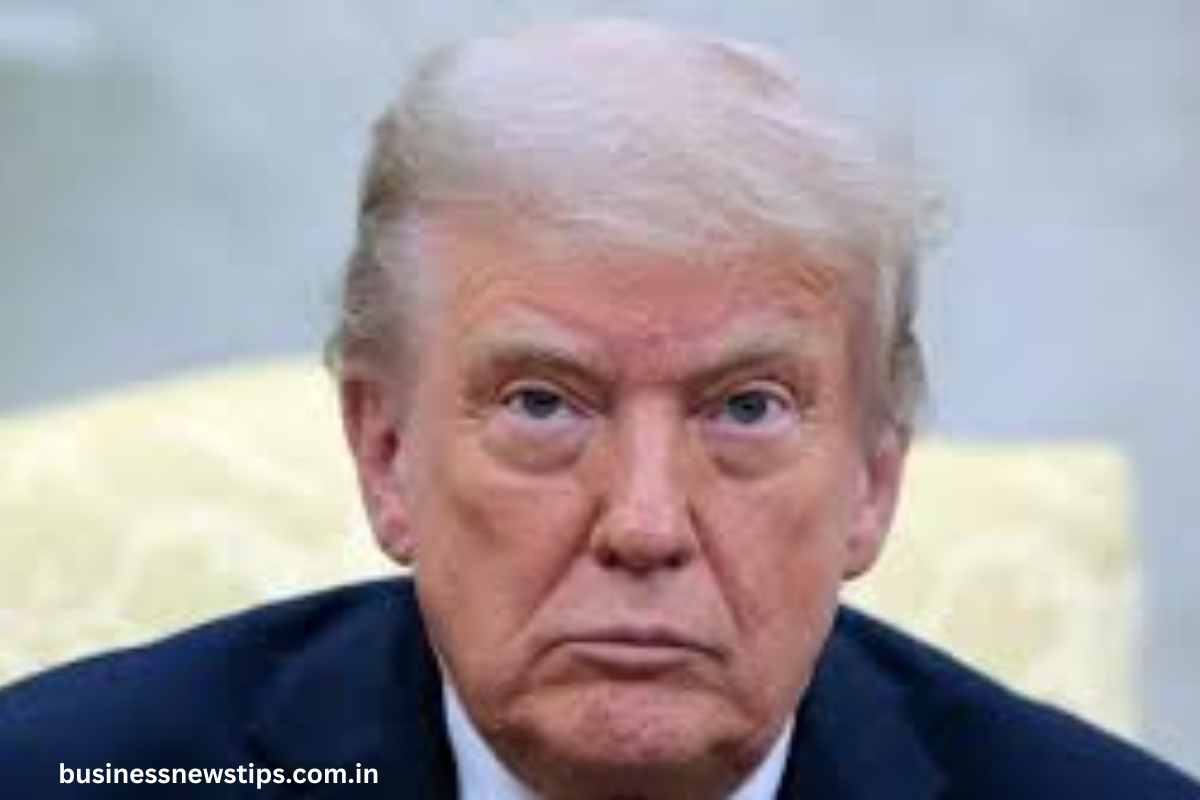
In a high-profile and sometimes combative interview with ABC News, President Donald Trump marked his first 100 days back in office by defending key policies on trade, immigration, and national security. Conducted by veteran anchor Terry Moran, the interview showcased Trump’s unfiltered style as he pushed back on criticism and reaffirmed controversial positions on some of the most pressing topics facing the country.
Trade With China: A Sharp Turn Toward Confrontation
One of the most consequential topics of the interview was Trump’s approach to U.S.-China trade relations. The president reaffirmed his administration’s decision to implement a steep 145% tariff on Chinese imports, defending it as necessary to stop what he described as decades of economic exploitation by Beijing. He accused China of “ripping us off like nobody has ever ripped us off before.”
Trump rejected concerns that the tariffs would harm American consumers, stating, “China will eat those tariffs. It’s not going to be passed on.” This comment contradicts earlier statements in which he had suggested negotiations were underway to reduce tariff levels. Critics argue that tariffs of this magnitude function more like trade embargoes, but Trump insisted that this is precisely the point — saying it’s “good” and “they deserve it.”
Economic analysts have expressed concern that such tariffs could disrupt supply chains and drive up consumer prices, though Trump dismissed those fears during the interview. “Since I came in, gasoline is down, groceries are down, egg prices are down — just about everything,” he said, without providing data to support the claim.
Immigration and Deportation: A Hardened Stance
The president’s immigration policies were another central theme of the interview, particularly his administration’s intensified efforts to deport undocumented immigrants. When pressed on whether due process is being afforded to those facing removal, Trump took a firm stance.
“If people come into our country illegally, there’s a different standard,” he said. “They came in illegally.”
Trump argued that the immigration court system is overwhelmed and cannot feasibly provide trials for every undocumented individual, reiterating a figure he has frequently used — that 21 million people are in the country illegally. Independent estimates suggest the number is closer to 11 million.
Asked if mass deportations undermine constitutional rights, the president responded, “We have to act fast. We can’t give 21 million trials. It doesn’t work that way.”
This position has alarmed human rights advocates and immigration attorneys, who argue that bypassing due process threatens civil liberties and creates room for wrongful deportations — a concern that became a focal point later in the interview.
Kilmar Abrego Garcia Case: A Test of Accountability
The case of Kilmar Abrego Garcia, a Maryland resident wrongly deported to El Salvador, was brought up by Moran as a test of Trump’s willingness to take responsibility. Despite a Supreme Court order demanding his return, the administration has so far refused to comply.
When asked whether he could personally intervene to bring Garcia back, Trump acknowledged that he had the power to do so but expressed reluctance. “If he were the gentleman that you say he is, I would do that… I’m not the one making this decision,” he said. Moran reminded Trump that he was, in fact, the President. Trump replied: “I follow the law. You want me to follow the law.”
The interview became especially tense when Trump alleged that Abrego Garcia was affiliated with the MS-13 gang, showing a photo he claimed displayed gang-related tattoos. When Moran challenged the image’s authenticity and said it had been digitally altered, Trump bristled. “Terry, you can’t do that. They’ve given you the big break of a lifetime. You’re doing the interview.” He insisted that the man had gang ties, saying, “Go look at his hand.”
Garcia’s legal team has repeatedly denied any gang involvement, and civil rights groups have condemned the administration’s use of disinformation to justify wrongful deportation.
Economy: Disputed Claims of Progress
Turning to the economy, Trump painted a rosy picture of American life under his leadership. He claimed that prices across the board were declining, despite conflicting reports from economic monitoring agencies that show inflation remains a concern in key sectors.
Asked about voters’ growing anxiety about cost-of-living pressures, Trump dismissed the question. “Prices are down. Tourism is up. People are doing better,” he said.
Moran challenged Trump’s assertion that U.S. tourism is thriving, citing federal data showing a decline in international arrivals. Trump replied confidently, “Wait till you see the numbers.”
While some economic indicators — such as job growth in manufacturing — have improved, economists say the gains are uneven and may not fully offset inflationary pressures felt by the middle and lower classes. Still, Trump has used favorable data points to argue that his policies are revitalizing the American economy.
Foreign Policy and Putin
The interview also touched on international affairs, particularly U.S. relations with Russia and President Vladimir Putin. Trump suggested that his personal relationship with Putin acts as a stabilizing force and hinted at a potential thaw in tensions between the two nations.
“He respects me, and I respect strength. That’s how you avoid wars,” Trump said. He did not elaborate on his plans for future engagement with Russia or whether his administration would continue providing military aid to Ukraine, a question that has sparked concern among NATO allies.
Trump’s critics argue that his posture toward Russia remains troublingly conciliatory, especially amid global scrutiny of Moscow’s actions in Eastern Europe. The president, however, framed his approach as pragmatic and in America’s best interest.
Style and Strategy: Trump’s Unfiltered Persona
Throughout the interview, Trump was characteristically combative and unapologetic. He referred to ABC News as “one of the worst” media outlets and appeared visibly irritated during several exchanges. Yet he remained on message, touting his administration’s record on trade, border security, and economic recovery.
Trump’s political strategy appears to hinge on portraying himself as a fighter for the American people — someone who stands up to both foreign adversaries and domestic critics. His interview served to energize his base while drawing fierce criticism from opponents who see his rhetoric as inflammatory and misleading.
Frequently Asked Question
Why did President Trump impose steep tariffs on Chinese goods?
Trump claims China has been economically exploiting the U.S. and says the tariffs are a way to level the playing field. He insisted the tariffs are fair and that China, not American consumers, will bear the cost.
Will these tariffs impact U.S. prices?
Trump says no, though many economists disagree and warn that consumers could face higher costs, particularly in electronics and consumer goods.
What is Trump’s stance on immigration enforcement?
Trump supports aggressive deportation efforts, stating undocumented immigrants should not receive the same legal process as citizens. He believes the volume of cases makes full due process unfeasible.
Did Trump confirm the U.S. is bypassing legal protections for undocumented immigrants?
He acknowledged a need to “act fast” and questioned the practicality of giving individual trials to every undocumented immigrant, implying support for expedited removals.
Who is Kilmar Abrego Garcia?
A Maryland resident who was wrongly deported to El Salvador despite a court order allowing him to stay in the U.S.
Did Trump admit to being able to bring him back?
Yes, but he declined to act, citing allegations that Garcia was part of a gang — a claim not backed by evidence.
Was the photo Trump used to justify the deportation real?
The ABC interviewer pointed out it was photoshopped. Trump insisted it was genuine, leading to a tense exchange.
What did Trump say about the economy?
He claimed prices for gasoline, groceries, and eggs have dropped, and that tourism is up. These claims are disputed by current data.
Are Americans still feeling economic pressure?
Yes, according to polls and independent data. Many Americans cite inflation, housing costs, and wages as ongoing concerns.
Conclusion
As Trump closes out his first 100 days in office, this interview underscores the themes likely to dominate his reelection campaign: tough immigration policies, aggressive trade actions, and defiance toward both the media and the political establishment.
