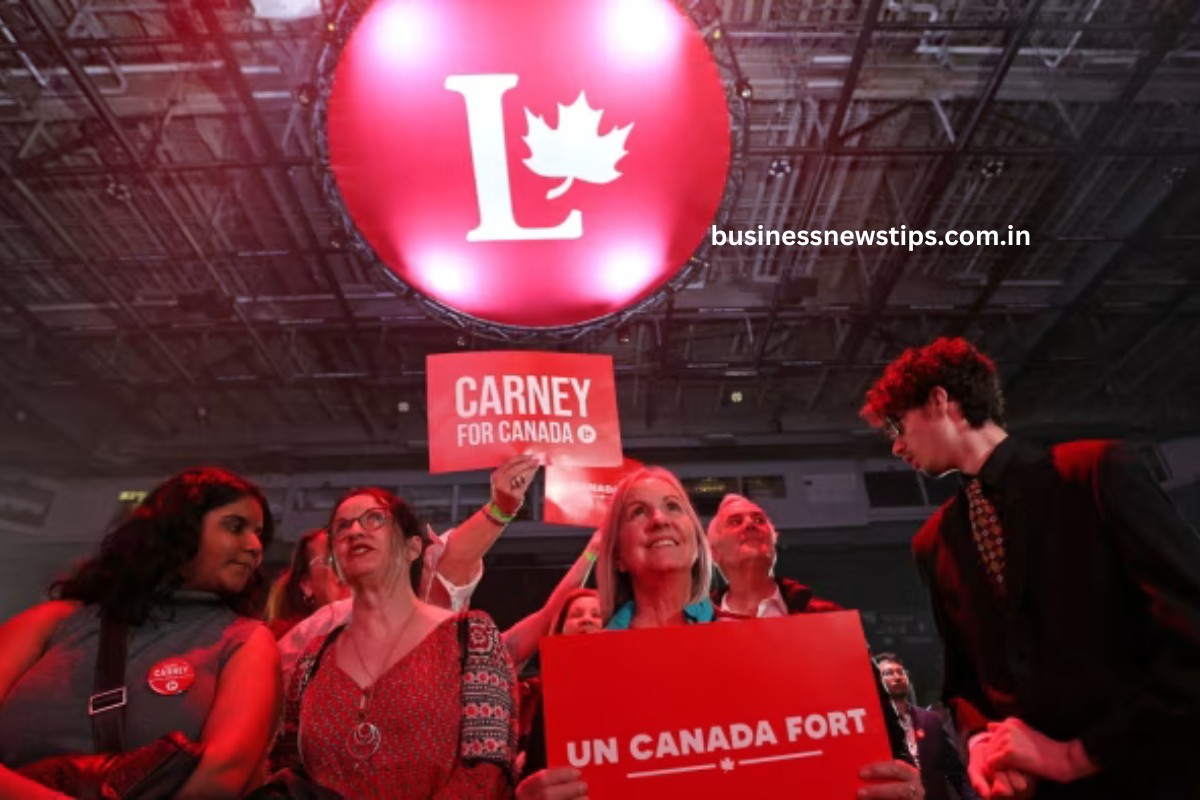
Dramatic political development, Mark Carney has led the Liberal Party of Canada to electoral victory, marking a new era in Canadian leadership. The election was shaped not only by domestic issues like inflation, healthcare, and climate change, but also by growing tensions with the United States—particularly with U.S. President Donald Trump. Carney’s message of strength, stability, and resistance to American overreach resonated with voters, propelling the Liberals to a decisive, if minority, win.
Who Is Mark Carney?
Mark Carney is not a typical politician. Known internationally for his work as Governor of both the Bank of Canada and the Bank of England, Carney has long been regarded as one of the world’s most respected economists. His transition into politics was met with skepticism by some and hope by others. With a reputation for technocratic expertise, clear-headed crisis management, and international credibility, Carney promised a steadier hand than his political predecessors.
His campaign strategy rested on two pillars: domestic renewal and international strength—the latter underscored by his open stance against Donald Trump’s renewed presidency and its implications for Canadian sovereignty.
The Trump Factor: A Unifying Threat
One of the defining features of this election cycle was the impact of U.S. politics. Donald Trump’s return to the White House sent shockwaves across the globe, but few nations feel the ripple effects of American politics more than Canada. Trump’s aggressive trade posturing, threats to NATO, and isolationist economic rhetoric once again posed risks to Canadian industries—particularly in energy, automotive, and agriculture.
Mark Carney used Trump’s rhetoric and policies as a rallying point. He promised to “stand up to bullies,” strengthen Canada’s global alliances beyond the U.S., and create economic buffers against American unpredictability. His sharp criticism of Trump was calculated but impactful, striking a balance between national pride and global pragmatism.
The Campaign: Stability Over Spectacle
Carney’s Liberal campaign avoided flash and celebrity in favor of substance. He focused heavily on economic competence, climate accountability, and restoring international respect for Canada. By contrast, Conservative leader Pierre Poilievre leaned into populist themes, criticizing federal overreach and inflation while positioning himself as a voice for “working Canadians.”
While Poilievre generated enthusiasm among conservative voters, his message struggled to broaden appeal beyond the base. Carney, meanwhile, was able to consolidate centrist and progressive voters, especially in urban and suburban ridings.
Election Night: A Liberal Resurgence
On election night, the results defied many early polls. The Liberals won 165 seats—enough to form a minority government and comfortably fend off the Conservatives, who took 147. Though short of a majority, it was a strong enough mandate to govern with support from the New Democratic Party (NDP), which retained 22 seats.
Notably, the Bloc Québécois and the Green Party saw significant losses, signaling a consolidation of progressive votes under the Liberal banner. Meanwhile, NDP leader Jagmeet Singh lost his seat, sparking questions about the party’s direction and relevance in a post-pandemic political landscape.
Policy Outlook: What Comes Next?
Economic Stabilization
Carney inherits a slowing economy, persistent inflation, and a cost-of-living crisis. His background in central banking reassured many voters that he would take a cautious, informed approach to fiscal policy. Expect moderate tax reform, targeted stimulus, and stricter oversight of speculative sectors.
Trade Diversification
One of Carney’s first moves is expected to involve reinforcing trade relationships with the European Union, Asia-Pacific nations, and Latin America. Reducing dependency on the U.S. market—especially under Trump—is a clear priority.
Climate Leadership
Unlike previous Liberal leaders, Carney has pledged concrete, time-bound goals for Canada’s net-zero targets. He has indicated strong support for clean technology investments, electrification of transport, and phasing out fossil fuel subsidies.
Health and Housing
On the domestic front, Carney is expected to work with provinces to expand mental health services, improve national pharmacare, and address the housing affordability crisis through zoning reform and federal-provincial cooperation.
Challenges Facing Carney
Minority Government Dynamics
While the Liberals won more seats than their rivals, they do not have a majority. Carney will need to build bridges with the NDP and possibly the Greens to pass legislation. This demands strategic compromise without watering down core priorities.
Trump’s Retaliation
Trump’s administration has already signaled displeasure with Carney’s rhetoric. Trade pressure, tariffs, and diplomatic tension may escalate, testing Carney’s resolve and international diplomacy skills.
Internal Party Expectations
Carney’s rise has sidelined traditional Liberal powerbrokers and may provoke friction within the party. Managing internal expectations while staying focused on his broader vision will require deft leadership.
International Reaction
Carney’s election has been well-received by global financial markets and Western allies. European leaders, especially in France and Germany, have welcomed his pro-EU stance and support for multilateralism. In the U.S., however, reactions have been mixed. While Democrats see Carney as a sophisticated statesman, Trump’s inner circle views him as a threat to the U.S.-Canada alliance under Trump’s “America First” agenda.
Legacy of Trudeau
Though Justin Trudeau stepped down prior to the election, his legacy cast a long shadow over the race. Critics of Trudeau pointed to ethics scandals and inconsistent policy follow-through, while supporters credited him with guiding Canada through COVID-19 and advancing social justice issues. Carney’s victory offers the Liberals a chance to reset, rebuild trust, and shift focus from personality to policy.
Frequently Asked Questions
Who is Mark Carney?
Mark Carney is a globally respected economist and former Governor of both the Bank of Canada and the Bank of England. He entered Canadian politics with the Liberal Party, bringing a reputation for financial expertise, crisis management, and international credibility. His campaign focused on stability, economic resilience, and a firm stance against U.S. President Donald Trump’s aggressive policies.
What was the main issue in the 2025 Canadian federal election?
The election was heavily influenced by concerns over the economy, inflation, housing affordability, climate action, and Canada’s relationship with the United States. Carney’s direct opposition to Trump’s trade threats and political pressure became a unifying message for many voters.
Did the Liberal Party win a majority?
No, the Liberals formed a minority government. While they won the most seats, they did not secure an outright majority and will need support from other parties, such as the NDP, to pass legislation.
How did Trump influence the Canadian election?
Trump’s return to the U.S. presidency played a major role in shaping the Canadian election. His confrontational trade policies and nationalist rhetoric created uncertainty for Canada, and Carney used this as a key talking point, vowing to protect Canadian interests and assert sovereignty.
What happens next under Mark Carney’s leadership?
Carney is expected to focus on stabilizing the economy, advancing climate policy, diversifying trade away from the U.S., and improving housing and healthcare. His background suggests a more measured, policy-driven approach to governance, though he will face challenges governing with a minority and managing tensions with the U.S
Conclusion
Mark Carney’s victory marks a defining moment for Canada’s political future. In choosing a leader known for expertise over theatrics, Canadian voters sent a clear message: they want steady, capable leadership in an increasingly unpredictable world. Carney’s open challenge to Donald Trump’s rhetoric and his promise to reassert Canada’s independence on the global stage have re-energized the Liberal Party and reshaped the country’s political landscape.
