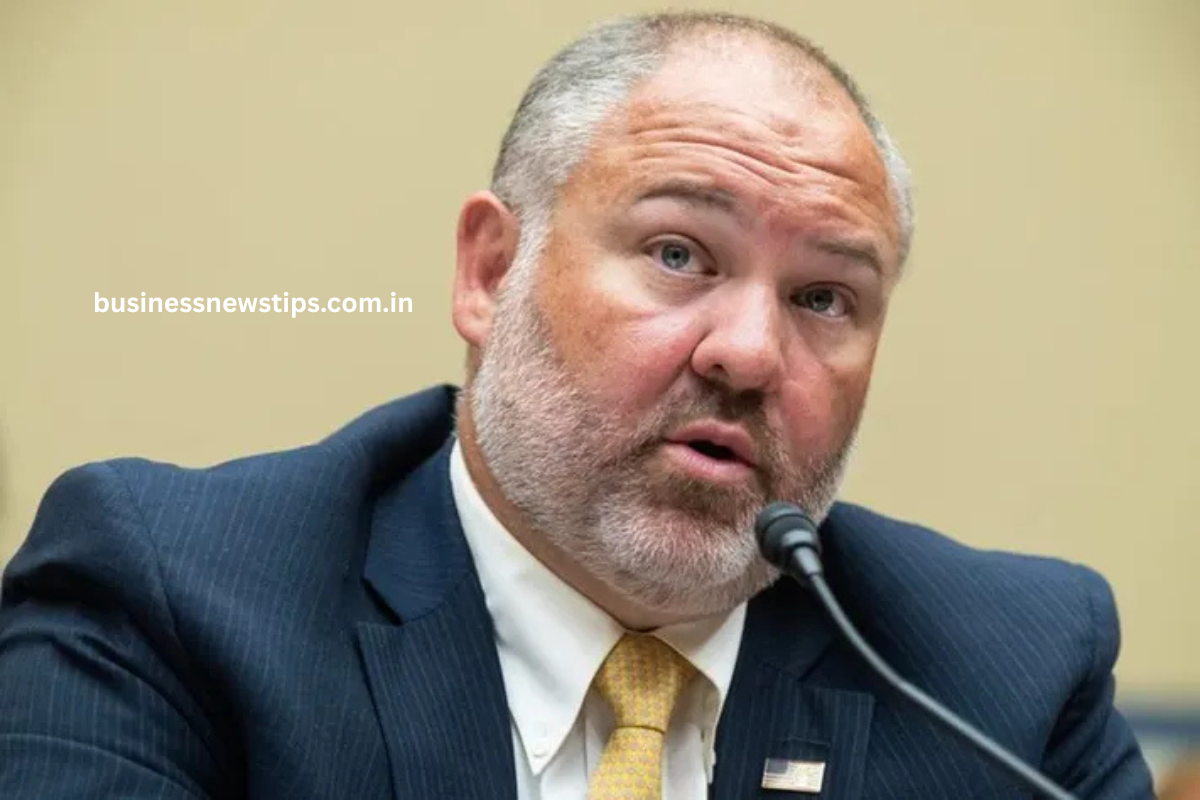
In a stunning shake-up within the federal government, President Donald Trump has reportedly decided to replace Gary Shapley as the acting commissioner of the Internal Revenue Service (IRS) following an internal dispute involving Treasury Secretary Scott Bessent and billionaire Elon Musk. The episode marks a new chapter in a growing power struggle between Trump allies in key positions and raises fresh questions about the influence of political and corporate interests on federal appointments.
The Appointment and Sudden Reversal
Gary Shapley, a longtime IRS supervisory special agent, was quietly appointed as acting commissioner of the IRS on Tuesday. His tenure, however, appears to have been short-lived. Multiple sources cited by The New York Times confirmed that Trump intends to remove Shapley and replace him with Michael Faulkender, the current deputy secretary of the Treasury.
Originally, Shapley was expected to serve in the role temporarily while the Senate considered the president’s permanent pick for the position: former Congressman Billy Long. However, according to insiders, Bessent took serious issue with the way Shapley’s appointment was handled, allegedly without his knowledge or approval. This complaint reportedly prompted Trump to reverse course.
Behind the Scenes: Bessent vs. Musk
At the heart of the controversy lies a deeper conflict—one that involves two of Trump’s most influential backers: Scott Bessent and Elon Musk.
Bessent, a former Soros Fund Management executive turned conservative economic adviser, was elevated to the role of Treasury Secretary earlier in Trump’s current term. His influence over economic policy and fiscal appointments has been significant, and his friction with Musk has intensified over the past several months.
According to officials close to the matter, Bessent was blindsided by Shapley’s appointment and was furious that Musk had allegedly pushed it through without his input. Though no formal confirmation of Musk’s role in the appointment has been made public, sources say the Tesla and SpaceX CEO personally advocated for Shapley, perhaps viewing him as a key figure aligned with broader investigations and political interests.
Adding fuel to the fire, Musk reportedly reposted a social media tirade by right-wing commentator Laura Loomer attacking Bessent. Loomer accused the Treasury Secretary of disloyalty to the president and characterized Shapley’s removal as a political betrayal. Musk’s repost appeared to signal his dissatisfaction with Bessent and his continuing influence on Trump-era economic policy.
In another apparent jab, Musk has publicly promoted Howard Lutnick, CEO of Cantor Fitzgerald and current Commerce Secretary, as a better candidate for Treasury Secretary—a position that Bessent currently holds.
The Role of Gary Shapley
Gary Shapley is no stranger to political controversy. A respected figure within the IRS, Shapley gained national attention after publicly alleging that the agency had mishandled its investigation into Hunter Biden, President Joe Biden’s son. Shapley claimed political interference obstructed IRS investigators from fully pursuing tax-related charges.
His testimony before Congress sparked a wave of partisan debate, with Republicans hailing him as a whistleblower and Democrats accusing him of politicizing tax enforcement.
Although Shapley was not formally removed due to his Hunter Biden involvement, the political baggage he carries may have made his appointment even more contentious in a politically volatile environment.
Fallout from Previous Leadership
Shapley’s predecessor, Melanie Krause, resigned amid growing controversy. Her departure followed revelations that the Treasury Department had agreed to share sensitive IRS data with Immigration and Customs Enforcement (ICE), ostensibly to assist in efforts to deport undocumented immigrants. This decision, according to critics, undermined the traditional firewall between the IRS and law enforcement agencies.
Bessent was reportedly critical of the policy and believed Krause had overstepped her bounds. When Krause stepped down, the search for a replacement began immediately—but apparently without Bessent’s full oversight. The subsequent appointment of Shapley, seen by some as orchestrated by Musk’s allies, was the final straw for the Treasury Secretary.
The Broader Battle for Influence
The ousting of Shapley highlights a deeper rift between two distinct factions within Trump’s political orbit: one aligned with technocrats and fiscal conservatives like Bessent, and the other tied to disruptive entrepreneurs and ideological outsiders like Musk.
While both men claim loyalty to Trump and his agenda, their visions for the administration’s economic and regulatory approach diverge sharply. Bessent has championed traditional conservative values—limited government, fiscal restraint, and regulatory reform—while Musk has taken a more erratic path, often publicly challenging Republican orthodoxy and supporting policies with a libertarian slant.
In recent months, this feud has spilled into public view. Aside from his criticisms of Bessent, Musk has also attacked other Trump officials. Notably, he called Peter Navarro, Trump’s former trade adviser, a “moron” over his support for aggressive tariff policies. Musk, a longtime proponent of free trade, has repeatedly clashed with protectionist voices in Trump’s camp.
Trump’s Balancing Act
For Trump, managing these warring factions has become increasingly difficult. While he values loyalty and rewards those who support him, he also relies on a wide range of advisers with competing agendas. Bessent’s complaint about Shapley may have resonated with Trump not only because it highlighted a breakdown in protocol but because it came from someone he views as an institutional stabilizer.
Replacing Shapley with Faulkender, a Bessent ally and seasoned policy economist, may be an attempt to restore order while preserving internal loyalty. Faulkender previously served as Assistant Secretary of the Treasury for Economic Policy and has been a reliable figure within conservative economic circles.
Political Implications
This latest personnel drama may also have ripple effects on Trump’s reelection campaign and Republican efforts to reshape federal agencies. With the IRS at the center of several political firestorms—from the targeting of conservative nonprofits during the Obama era to the investigation of Hunter Biden—the leadership of the agency has taken on outsized importance.
If Billy Long, Trump’s permanent nominee, is confirmed by the Senate, he is expected to lead the agency into a new era of conservative oversight. Long, a staunch Trump loyalist and former Missouri congressman, has previously supported broad audits of government spending and has expressed skepticism about expanded IRS funding.
Shapley’s brief tenure, however, may serve as a cautionary tale about the dangers of internal discord and unchecked political patronage.
What’s Next?
For now, Trump appears to have quelled the latest internal uprising by moving forward with Faulkender and reaffirming Bessent’s role as the administration’s economic gatekeeper. But with Musk’s continued outspokenness and influence over Republican policy and culture, further clashes seem inevitable.
The implications for federal agency leadership, the role of billionaires in public policy, and the politicization of civil service positions are profound. As 2025 unfolds, the American public may see even more high-stakes power struggles play out behind the scenes—and sometimes in the headlines.
Frequently Asked Questions
Who is Gary Shapley?
Gary Shapley is a supervisory special agent with the IRS who gained national attention for blowing the whistle on the alleged mishandling of the IRS investigation into Hunter Biden. He was briefly appointed as acting commissioner of the IRS in 2025 before being replaced amid political controversy.
Why was Shapley removed as acting IRS commissioner?
Shapley was reportedly removed after Treasury Secretary Scott Bessent complained to President Trump that he had been appointed without Bessent’s consent. The move also followed growing tensions between Bessent and Elon Musk, who allegedly supported Shapley’s appointment.
What role did Elon Musk play in this controversy?
Elon Musk is believed to have advocated for Shapley’s appointment and publicly criticized Bessent, the Treasury Secretary. Musk’s involvement has highlighted a deeper power struggle within Trump’s circle between traditional conservatives and influential outsiders like Musk.
Who will replace Shapley at the IRS?
Michael Faulkender, the Deputy Treasury Secretary and a close ally of Bessent, is expected to step in as acting commissioner until the Senate confirms Trump’s permanent nominee, former Congressman Billy Long.
Who is Scott Bessent?
Scott Bessent is Trump’s Treasury Secretary and a major force in shaping fiscal and economic policy in the administration. A former hedge fund executive, Bessent has advocated for traditional conservative economic policies and has clashed with Musk over agency leadership and policy direction.
What is Billy Long’s background?
Billy Long is a former congressman from Missouri and a longtime Trump supporter. He has been nominated to serve as the permanent IRS commissioner and awaits Senate confirmation. He is known for backing conservative approaches to federal spending and oversight.
How does this impact Trump’s administration?
The episode reveals the complex internal dynamics and competing influences within Trump’s inner circle. While it may not derail the administration’s agenda, it underscores the challenges of balancing loyalty, policy priorities, and the egos of high-profile allies.
Conclusion
The rapid appointment and removal of Gary Shapley as acting IRS commissioner offers a revealing snapshot of the current state of power and politics in Washington. It reflects not just a bureaucratic misstep but a broader tug-of-war between ideological camps vying for influence within Trump’s administration.
On one side stands Scott Bessent, a fiscal conservative committed to a structured, traditional approach to governance. On the other, Elon Musk—an unconventional force whose influence over politics is fueled by wealth, public platforms, and iconoclastic ideas.
